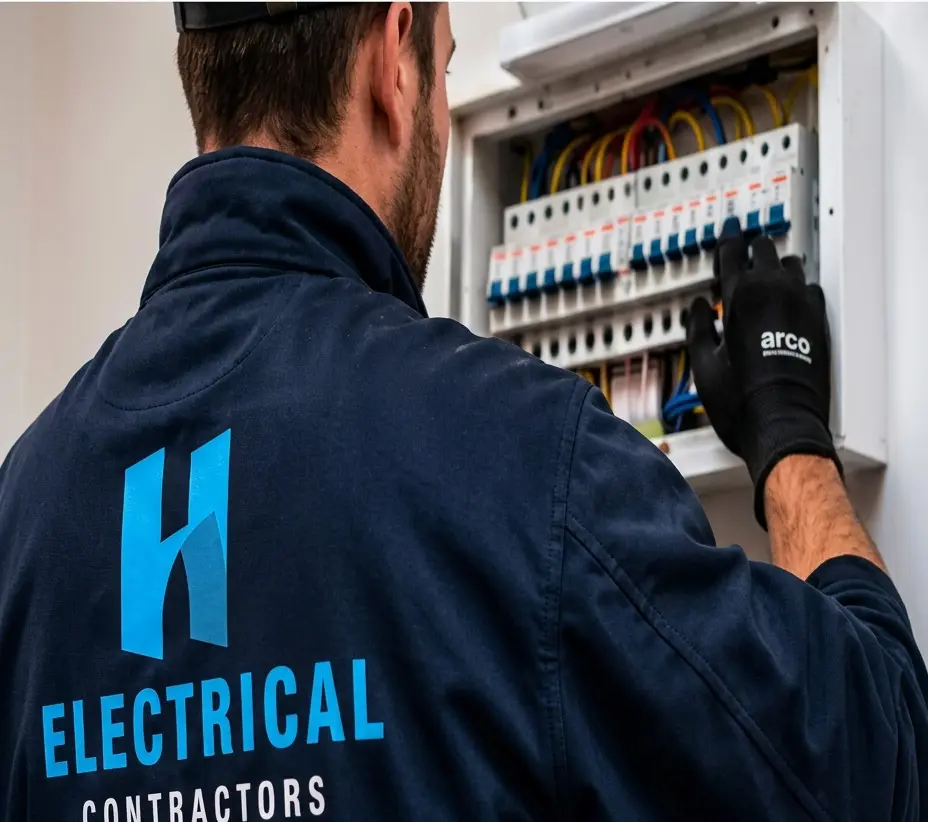

A lot of Dublin homes are still running on wiring that went in decades ago. It may still work, but it was never designed for induction hobs, electric showers, home offices and EV chargers. Here are the signs that your home is due a rewire, and the cases where a smaller job will do.
1. The wiring is 30 years old or more
Many houses in Ballyfermot, Crumlin, Drimnagh and Inchicore were built between the 1930s and 1960s. If your home has never been rewired, or you do not know when it last was, it is worth getting it checked. Age on its own does not mean the wiring is unsafe, but it is the most common reason we find problems.
2. Your fuse board has old style fuses or no RCD
A board with fuse wire, a wooden back board, or no RCD protection is a clear sign the installation is out of date. Sometimes a fuse board upgrade is enough. Sometimes testing shows the circuits behind it also need replacing.
3. Rubber or fabric covered cables
Older cables were insulated with rubber or fabric, which goes brittle and cracks with age. If you can see these cables in the attic, under the stairs or at the board, the wiring needs replacing.
4. Brown or black sockets and switches
Old style brown or black bakelite sockets and round pin sockets are a good sign that the wiring behind them is just as old.
5. Tripping, flickering or warm sockets
Breakers that trip often, lights that flicker, and sockets or switches that feel warm or buzz can point to overloaded or failing circuits. A burning smell or scorch marks around a socket mean you should stop using it and call an electrician straight away.
6. Not enough sockets
Extension leads in every room are a sign the installation was not designed for how you live now. Overloaded extension leads are a common cause of house fires.
7. You are renovating anyway
If you are putting in a new kitchen, an extension or new floors, this is the cheapest and tidiest time to rewire. The walls and floors are already open, and you avoid making good twice.
When you do not need a full rewire
Not every older home needs a full rewire. If the cables are in good condition and test well, a new consumer unit, some extra circuits and a few repairs may be all you need. A periodic inspection is the honest way to find out. It tests every circuit and tells you exactly what condition the wiring is in before you spend anything.
What does a rewire involve?
- Survey and quote. We look at the property and give you a clear written quote.
- First fix. New cables are run through floors, walls and the attic.
- Second fix. New sockets, switches, lights, smoke alarms and a new fuse board are fitted.
- Testing and certification. Every circuit is tested and certified.
A typical three bed semi in Dublin usually takes around a week on site. It is quicker if the house is empty, and we can stage the work if you are living there. Read more on our house rewire service page.
Get your wiring checked
H Electrical Contractors is a Safe Electric registered contractor based in Ballyfermot, Dublin 10. We rewire homes across Ballyfermot, Crumlin, Drimnagh, Inchicore, Kimmage and the rest of west and south west Dublin. Call us or send the form below for a free, no obligation quote.
Common questions
Can I live in the house during a rewire?
Often, yes. We can stage the work room by room and restore power each evening where possible. An empty house is quicker and usually costs less.
How long does a rewire take?
A typical three bed semi takes around a week of work on site. We give you a clear timeline with your quote.
Do I need a rewire or just a new fuse board?
It depends on the condition of the cables. A periodic inspection tests every circuit and tells you which one you need.
Will I get a certificate after a rewire?
Yes. The installation is tested on completion and certified, which you will need for insurance and when you sell.